Key indicators that your residence might be suffering from a termite infestation include the sight of mud tubes on walls or piers, timber that produces a hollow sound when tapped, doors and windows that stick unexpectedly, paint that appears to be bubbling, discarded wings, and discernible clicking or rustling sounds emanating from within the walls.
These signs can often be easily missed. Termites tend to eat timber from the inside out, which means that a skirting board or door frame may seem intact while being structurally damaged underneath. Here’s what you should be vigilant for and what sounds to listen to.
What Are the Most Effective Ways to Identify Termite Infestation in Your Home?
Termites often remain unnoticed, leaving behind subtle clues of their existence. A single sign does not definitively indicate an infestation. For instance, doors may stick due to humidity, and bubbling paint might simply signal moisture issues. The City of Gold Coast’s termite guide cautions that termites can cause extensive damage before detection, underscoring the necessity of regular inspections for early identification. If you notice any of these signs, do not disturb them; instead, seek a professional evaluation.
Read: Discovering Flying Termites: What Do They Truly Indicate?
Eight Essential Signs of Termites to Acknowledge and Listen For
#1 How to Identify Termite Mud Tubes on Walls, Piers, and Stumps
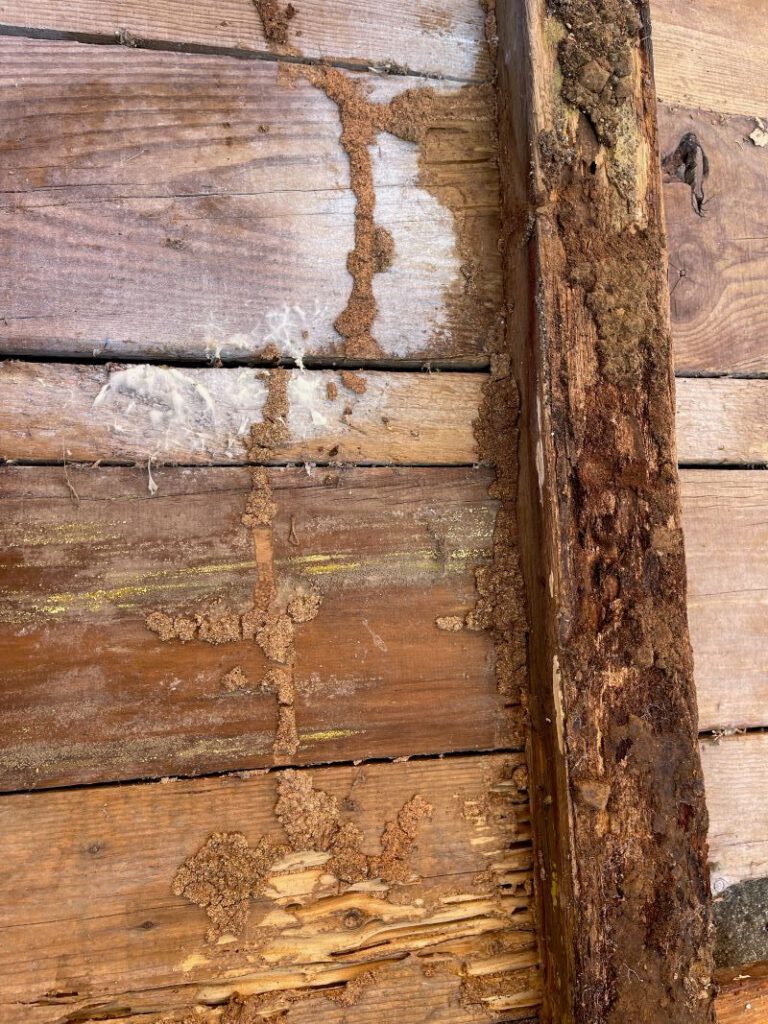
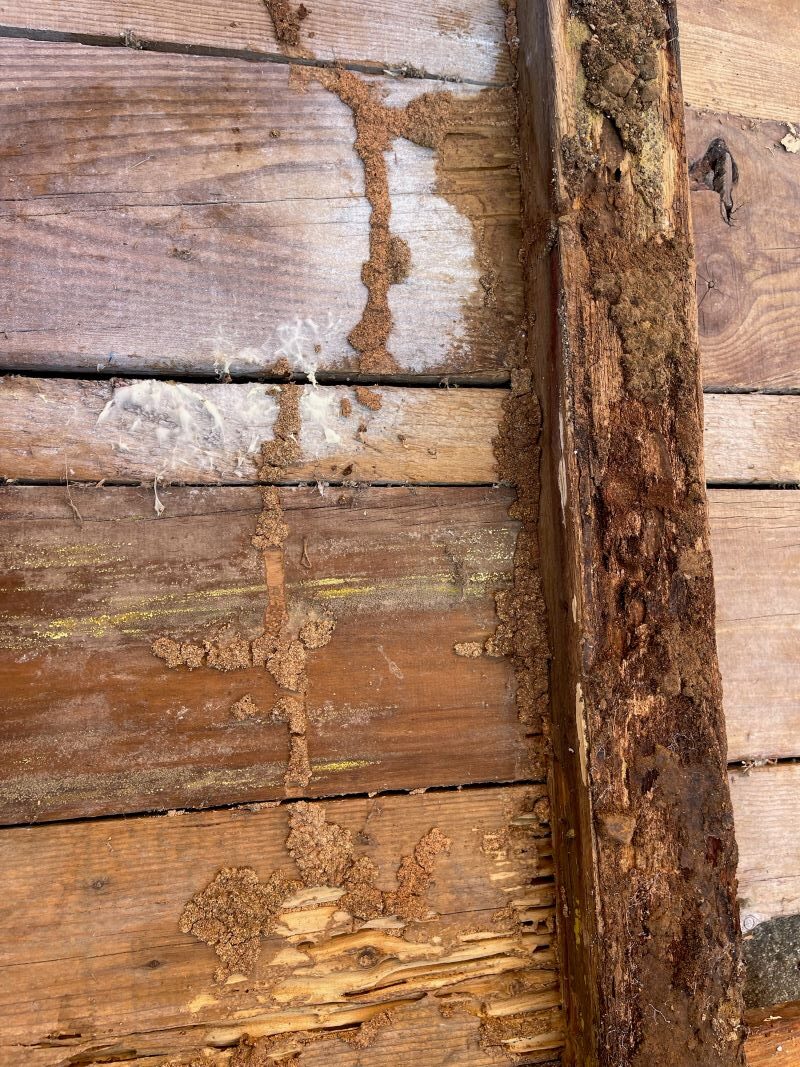
Mud tubes, also known as shelter tubes, are narrow channels constructed from dried mud by termites. These tubes contain a mixture of soil, timber debris, and saliva, enabling termites to travel between their nest and food sources while remaining shielded from the elements.
Look for these tubes climbing up external walls, foundations, brickwork, piers, stumps, and fence posts, as well as traversing concrete paths. Many individuals mistakenly assume they are merely dirt splattered by rain. The Department of Health in Victoria points out that when metal ant caps are installed on subfloor stumps, termites frequently build visible mud tubes over the cap, making the tops of the stumps crucial areas for inspection. If you discover a mud tube, avoid breaking or removing it.
#2 How to Listen for Termite Clicking or Rustling Noises in Your Walls
Termites can produce noticeable sounds. The City of Gold Coast notes that clicking or rustling noises within walls or timber often signify termite activity.
Certain termite species communicate through vibrations. Research from the University of Technology Sydney in 2018, based on studies by Sebastian Oberst, reveals that Coptotermes acinaciformis, a prevalent pest, uses vibrations to find food sources, monitor competitors and predators, and signal their colony. A 2017 study by Joseph Lai, Sebastian Oberst, and Theodore Evans further illustrates that soldier termites send out vibratory alarm signals to alert worker termites. This research pertains to vibrations transmitted through timber, although it does not clarify which vibrations may be audible through walls.
If you suspect you’ve heard clicking or rustling within a wall, take note of the location and avoid disturbing it. Termites can sometimes be silent, which is why our termite inspections incorporate audible testing using a donga tool, along with thermal and moisture imaging, and Termatrac radar to detect activity beneath surfaces.
#3 How to Detect Timber That Sounds Hollow or Feels Soft
Skirting boards, door frames, and floorboards that produce a hollow sound when tapped are common indicators of termite activity. The Gold Coast guide highlights timber that appears soft or shows signs of damage.
#4 How to Recognise Sticky Doors and Windows as Indicators of Termite Infestation
Doors and windows that suddenly become difficult to open or close may be a sign of termite trouble. Moisture can also cause frames to swell, leading one to think the issue is due to rain. Termites consume the internal structure of door frames and window sills, causing potential distortion as they hollow out the frame. If you notice multiple doors or windows sticking in your home, it’s prudent to arrange for an inspection.
#5 How to Identify Bubbling Paint as a Sign of Termite Activity
Bubbling or peeling paint that resembles water damage is a common indicator of termite presence, according to the Gold Coast council. Termites require moisture in addition to timber. The Australian Museum clarifies that subterranean termites typically become problematic in structures with a consistent water source, such as leaking pipes or roofs.
#6 How to Spot Termite Holes in Ceilings or Walls
Termites can create small openings in plaster, gyprock, or paint as they consume timber. This results in tiny holes, often accompanied by fine, sandy debris. If you notice holes in a ceiling or wall without an obvious cause, take them seriously, as they may indicate prolonged termite activity within the structure.
#7 How to Identify Discarded Termite Wings Near Windows, Doors, or Lights
Flying termites typically leave their nests in warm, humid conditions to establish new colonies, shedding their wings upon landing, as noted by the Australian Museum. According to the Department of Health in Victoria, discarded wings are a reliable indicator of termite presence.
A swarm near your property does not necessarily indicate that your home is infested, as they can originate from nests in gardens, neighbouring yards, or nearby trees. It serves as a valid reason to arrange for an inspection to determine the location of the colony.
#8 How to Spot Live Termites in Timber or Mud Tubes
Occasionally, you may see termites themselves within timber, walls, furniture, or damaged mud tubes. The Australian Museum describes termites as having pale brown to white bodies with darker heads, bead-like antennae, and a lack of a narrow waist, distinguishing them from ants. Soldier termites have larger, darker heads, and the Department of Health in Victoria notes that Coptotermes soldiers release a white, rubbery, glue-like substance when disturbed. If you encounter live termites, do not disturb them.
Read: Why Winter is the Perfect Time for a Termite Inspection
What Are the Visible Signs of Common Termite Damage?
Termite damage often lies hidden behind seemingly normal surfaces. Since termites consume timber from the inside out, a wall that appears intact may actually be hollow beneath the paint.
Termite damage can resemble wood rot, making it challenging to differentiate between the two. A timber pest inspection conducted according to the Australian Standard AS 4349.3 covers subterranean and dampwood termites, borers, and wood decay fungi (rot), providing clarity on the specific issue. Our pre-purchase termite inspection page details the components of this standard.
Where Should You Search for Signs of Termites in a Sydney Home?
Our termite protection guide identifies much of Sydney, including the Hills District, North Shore, Western Sydney, and coastal suburbs, as high-risk areas for termite activity. Important areas to inspect include:
- The roof void and associated roof timbers.
- The subfloor, particularly around stumps and piers.
- Skirting boards, architraves, and door and window frames, especially in moisture-prone areas like bathrooms and laundries.
- Timber fences, retaining walls, and tree stumps.
- Garden beds and mulch adjacent to the home, particularly where they contact the slab edge.
- Wooden furniture and stored timber.
Gum trees located close to the house should also be included in your inspection. The Department of Health in Victoria notes that Coptotermes termites prefer nesting in trees, particularly eucalypts, as well as in stumps, beneath concrete floors, and within wall cavities.
What Steps Should You Take If You Notice Signs of Termites?
Avoid disturbing the area. Do not spray, break the mud tubes, or seal openings from which flying termites emerge. Disturbing an active termite lead can cause the termites to relocate, making them harder to track and treat.
Take a photograph, note the location of the sign, and contact us at 0410 244 244. Share your observations and their location, and we will schedule a termite inspection. If termites are confirmed, our termite treatment page outlines the methods we use to eradicate the colony and safeguard your home.
How Does So Pest Off Detect Hidden Termites?
Since termites operate within timber, a So Pest Off termite inspection utilises a combination of four detection methods:
- A visual assessment to identify signs of termite activity and damage.
- Audible testing with a donga tool to locate hollow spots in timber.
- Thermal and moisture imaging. A thermal imaging camera detects temperature variations caused by an active nest or moisture pocket behind a surface, while a moisture meter checks if a wall is retaining excess water.
- Termatrac radar, which detects live termite movement behind plasterboard, timber, brick, and masonry without the need for drilling.
Termatrac, developed in Australia, incorporates radar, thermal, moisture, and temperature sensors. When termites are present in a home, our technician uses Termatrac termite tracking to trace them through walls and frames to their entry points and nests, eliminating the need to dismantle walls, skirting, and floorboards to locate them. This method is also useful when live termites are found during renovations, allowing us to assess the extent of activity within the walls before further work is carried out.
The radar detects movement, requiring a quiet and unobstructed environment during tracking. It does not identify previous damage where termites have vacated, which is why tracking is conducted after a comprehensive inspection rather than as a standalone method.
You will receive a written report complete with photographs, detailing what was inspected, findings, inaccessible areas, and our recommendations. We advise scheduling a termite inspection annually for homes in Sydney, with increased frequency if termites have been previously identified or if the property contains significant timber and moisture.
Essential Points on Recognising Signs of Termites
Identifying mud tubes, hearing clicking or rustling in walls, detecting hollow timber, experiencing sticky doors, observing bubbling paint, discovering tiny holes, finding discarded wings, and spotting live termites are all compelling reasons to arrange a termite inspection. Termites can inflict considerable damage before they are detected; therefore, it is crucial to leave any signs undisturbed and have them evaluated by professionals.
Contact So Pest Off at 0410 244 244 or arrange for a termite inspection. We service the Hills District, Northern Beaches, and Greater Sydney.
Frequently Asked Questions About Identifying Signs of Termites
Can You Hear Termites Inside the Walls?
Occasionally. Clicking or rustling noises within walls or timber are often cited as signs of termite activity by the City of Gold Coast. The absence of sound does not guarantee that the house is termite-free, making listening an insufficient substitute for a thorough termite inspection.
What Do Termite Mud Tubes Look Like?
They appear as thin trails of dried mud ascending walls, foundations, piers, stumps, or fence posts, composed of soil, timber particles, and termite saliva. Do not disturb them; instead, arrange for an inspection.
Do Termites Leave Droppings?
Some species do. The City of Gold Coast notes that small, pellet-like droppings, known as frass, often indicate the presence of drywood termites. The WoodSolutions durability guide reports that drywood termites are primarily found in Cooktown, Queensland, and further north, while subterranean termites are the main concern in Sydney, emerging from the soil.
How Can I Differentiate Between Termites and Ants?
Termites lack a narrow waist, have bead-like antennae, and possess pale brown to white bodies, according to the Australian Museum. Although often referred to as white ants, they belong to a distinct insect classification separate from true ants.
How Often Should I Schedule a Termite Inspection in Sydney?
We recommend conducting a termite inspection annually for homes in Sydney. Increased frequency is advisable if termites have been previously identified or if the property contains significant timber and moisture.
So Pest Off is a family-owned pest control and termite management service located in Sydney’s Hills District, licensed by the NSW EPA (Pesticide Licences 5103392 and 5201158) and accredited with Termidor, Trelona, and Termatrac.
Original Article First Published At: Signs of Termites in Your House: What to Look For and What to Listen For
The Article: Signs of Termites in Your House: Key Indicators to Notice first appeared on https://writebuff.com
The post Signs of Termites: Key Indicators in Your Home to Spot appeared first on Limits Of Strategy.
References:
Termite Signs: Essential Indicators to Identify in Your Home